Tuesday, July 16, 2019

Meeting My Goal With a Dangerous Writing Prompt

The reasons I have this blog are to allow me a place to reflect and to help keep me more accountable for what I want to do.

By having a blog, I force myself to think about what I'm doing (mostly in my classroom). It gives me the opportunity - in a more formal way - to think about what's going well, what's not going so well, and what I'd like to try.

I also feel the blog makes me more accountable for my own goals.  If I set out a goal in a blog post, then I am declaring it to the world. Sharing the goal makes it more real and makes it more pressing to achieve that goal.  Sure, few, if any, people may read the blog posts, but the internet is live, public and forever.  This puts my goals out for everyone to see. Instead of keeping them private and being accountable to only myself, I have the sense that others could be looking over my shoulder, checking in on me.

So, as a result of this reflection, I’m recommitting myself to this blog.  This time, I’m giving myself a specific schedule. Expect a new post every Tuesday (there’s that goal made public). Today is Tuesday; so far, so good.

I also know that I can often have writer’s block, not knowing what to reflect upon or share. Consequently, I’m giving myself permission to be brief - a few paragraphs will be okay.  Also, to help break any blocks, I will use The Most Dangerous Writing Prompts. Game-like, the site has the writer keep working for a certain amount of time. If no progress is made after a certain interval, the program starts warning the writer, then the screen turns red, and you can no longer type (It does allow you to save work even if not finished.).

Not knowing what I would write for this post, I used The Most Dangerous Writing Prompts, set to three minutes. (I found it was a low expectation.)  I produced a few paragraphs in that time, then moved over to a word processor to finish up. I envision using the site with my students for activities like warm-ups or brain dumps in order to build their writing stamina and writing readiness. I am hopeful that they can see it as a tool that encourages improvement. 

I am optimistic that the schedule and the site will make my blogging goal manageable and attainable.

____________________________________

If you have strategies to be a consistent blogger or to help develop students’ writing stamina, or, if this post has generated some thoughts of your own, please share in the comments. I would appreciate hearing from you.

Monday, March 25, 2019

Could I Have Some Fries With That? Serving Up Novels in Social Studies

“How many are in your dinner party?”

“Three.”

“We have a lovely seat with a view for you. Right this way..…”

“.....Are you ready to order?”


“Um, yes. I’d like to try some Iqbal.”

Introducing books to students takes on a whole different feel when doing so in an unexpected way.  

In our geography classes, we read books to help bring the story of geography and people to the students. The story presented in a novel helps students to be empathetic and to bring the world more to life.  They become exposed to different experiences in the world and better realize the advantages in their own lives.


To hook the students and start them off on the right foot in their reading, I present the books to the students in the form of a book buffet. I transform my classroom into Restaurant 144.

The students are greeted at the door by the Restaurant 144 sign and are asked how many in their dining party. As soft jazz music greets their ears, they are escorted across the room to a table adorned with a tablecloth and tea lights. They take their seats, menus are distributed, and the diners are told that a server will be over shortly to take their orders.

The menus have photos of certain books with a brief introduction to each book. Students look through the menu to make a choice. When the server returns, orders are taken, and the books are served - on plates, of course. The server informs the diners that they can return their choice to the “kitchen” if it is not to their liking and they can make another selection. (Our assistant principal was even able to come in as a guest server.)


To further develop the atmosphere, when a student asked if he could go get some water, I broke out a pitcher of water and cups and served water to those students in need of a drink.

The restaurant ambiance heightened students’ interest. Behavior was also enhanced, as students acted more formally with courtesy, pleases, and thank yous, just as if they were in a restaurant. As the day proceeded and different classes came to the doorway, I could see that word of mouth had already amplified other students' anticipation.

And reading.

All students were engaged in reading the book of their choice. Even reluctant readers became absorbed with their choice. The unique environment and their ability to choose worked together to hook the students.


After all the students chose a book and had read several pages to confirm the book as the right choice for themselves, I organized students into groups that had chosen the same book. Together they looked over the guiding questions and made a reading schedule for themselves based on the three discussion dates that I set. On these dates, each group would hold their own Socratic seminar-like discussion which focused on the guiding questions and other questions or thoughts any of the readers wanted to bring forth to the group.

Most students, even reluctant readers, were very engaged in reading their books and involved on the discussion dates. The effort to pull off this hook was minimal, but the results impressive.  The students had fun being introduced to a variety of books. They had the opportunity to choose, try, and choose a different book if necessary. And I had fun as well, interacting with students in a different way, and seeing them highly engaged in reading.

Restaurant 144 was a great success.


If you have had success creating an unexpected hook for students or transforming your classroom to engage students, or if this post has generated some thoughts of your own, please share in the comments. I would appreciate hearing from you.

Saturday, February 23, 2019

Fun! Low Key! Community Building! World Geography & Culture Night!

Inside the EarthView Globe
Each year, we organize a World Geography and Culture Night at my school. The idea was born out of the need to broaden our students horizons and expose them to different aspects of the world that they may not be aware of.

Although our evening has taken place in the winter or spring, planning starts over the summer and gets into full swing come September. Over the summer we determine the date of our event by booking the unique EarthView Globe. This 20 foot in diameter inflatable globe is a highlighted feature of the evening. Families have the opportunity to go inside the globe and hear from Bridgewater State University’s geographic experts. 


Other than making sure space is available for the evening, the next step is to reach out to staff members for support. We ask the staff to if they have ideas for a geography or culture related activity they would like to facilitate. We also offer the opportunity to facilitate simple activities that we already have prepared. This year, we had far more staff involvement than in the past. Their presence gave a far different feel to Geo Night. The night evolved into a schoolwide event, rather than a a social studies department event.

In addition to the EarthView Globe, we have several other consistent activities.

As a concluding activity to the evening, we have always had a special event. We have invited in performers which highlight culture in a manner that our students have never seen before: Taiko drumming, traditional dancing, etc. More recently, we have concluded with a Mystery Skype. We have Skyped with places such as Singapore and China. The time difference plays into our favor during an evening event, and the crowd is always enthusiastic as they try to figure out the location.

Our reading specialist and assistant principal (the Crazy Reading Ladies) have also developed an activity each year. They tie it into the book that is the current school-wide read (#AllIn19). This year, students created six word stories based on pictures of shoes. The activity was connected to Salt to the Sea by Ruta Sepetys which had a character philosophize that you can tell a person’s story by the shoes that they wear. Families perused a variety of shoes from different cultures and economic classes to devise their six word stories.

The school's Spanish teachers also offer an activity each year. For our most recent evening, they engaged students by crafting fiesta themed flowers. The room was abuzz with activity proving the flowers were a huge hit. In the past, they have engaged students with Spanish dancing and Day of the Dead activities.

Other standbys include landform bingo and geo bee questions. A newer addition has been a BreakOut room that is connected to some other place in the world. This year we had multiple breakout boxes running at the same time within a room. We gathered several traditional games for families to learn and play in another room. Students also enjoyed a green screen where they can choose from a selection of places throughout the world that they can “visit.” The picture of them at the location is then emailed to the students or families.

Our town’s youth librarian has gotten involved the last two years as well. She offers a “book tasting,” displaying a wide variety of books that highlight culture and geography. Families with library cards can even check out books of interest.

This year we also enjoyed the efforts of two of our eighth grade students. They organized a thorough exposure to India including food, dancing, dressing in authentic clothing, and making and painting diyas. Teachers were blown away by all they prepared and students were excited to get a taste of Indian culture.

The evening is structured so that families can attend the activities over an hour and a half. Originally, we had the activities run for about 25 minutes so that students could rotate through. The nature of middle school students took over, however, and the evening has become much more fluid. Most activities seem to work best with highly engaging activities that allow the students and families can come and go as they please.

The evening is fun and low key but full of energy. There are plenty of smiles that go around. Everyone walks away learning something new while enjoying themselves. Organizing a World Geography and Culture Night of your own would create a vibrant event that enhances your school’s culture.


If you have an evening like World Geography and Culture Night that happens at your school or, if this post has generated some thoughts or questions of your own, please share in the comments. I would appreciate hearing about them.


Photos From Our Event

Spanish Flowers
BreakOut Room
Six Word Stories
Mystery Skype
Book Tasting

Student Led Indian Dancing

Saturday, August 5, 2017

Improving Feedback

I want my students to learn.


I want to empower my students as well.  


I want them to realize success as independent learners.


To realize these ends, I have encouraged student voice and choice more and more through the years. Last year, I handed the students the reins for a PBL experience around the United Nations Sustainable Development Goals.


To further students on their path of self sufficiency and to stimulate their growth as learners, I want to improve feedback in my classroom.  I want it to be more frequent, more efficient, and, most of all, used by students. (Too often, it seems, feedback given on their work is not thoughtfully considered by students, while feedback through conversation will only  be implemented in the moment.)


I look to the following three resources to help.


Creating a Culture of Feedback
To support feedback as a norm in my classroom and to enhance self sufficiency, students will need to self assess. This will require guided practice.


In Creating a Culture of Feedback by William M. Ferriter and Paul J. Cancellieri, I was reintroduced to the video Austin’s Butterfly: Building Excellence in Student Work.  The clip shows how students, with direction, can successfully provide specific, constructive feedback for peers and themselves. They need to build this skill to become better learners and to enhance their ability to produce high quality work independently.


By sharing the video with students, giving them guidance, and having them practice, students will gain confidence in their ability to both self assess and peer assess. As they become more comfortable with self assessment they will gain the ability to independently create higher quality work.


Live Exit Tickets with Google Forms
I was introduced to Kevin Zahner through Twitter and was excited to find his blog post on on exit tickets.

He describes how students complete their exit tickets with a Google Form and results go into a Google Sheet. Zahner links a sheet to the form that was created using Alice Keeler’s RosterTab Template.  This allows a separate tab in the sheet to be generated for each student.


He also creates a query so that the students are then able to see their own responses from the form in their own Google Sheet. The most compelling part is that the feedback the teacher provides within the individual student tabs can be seen immediately by the student.


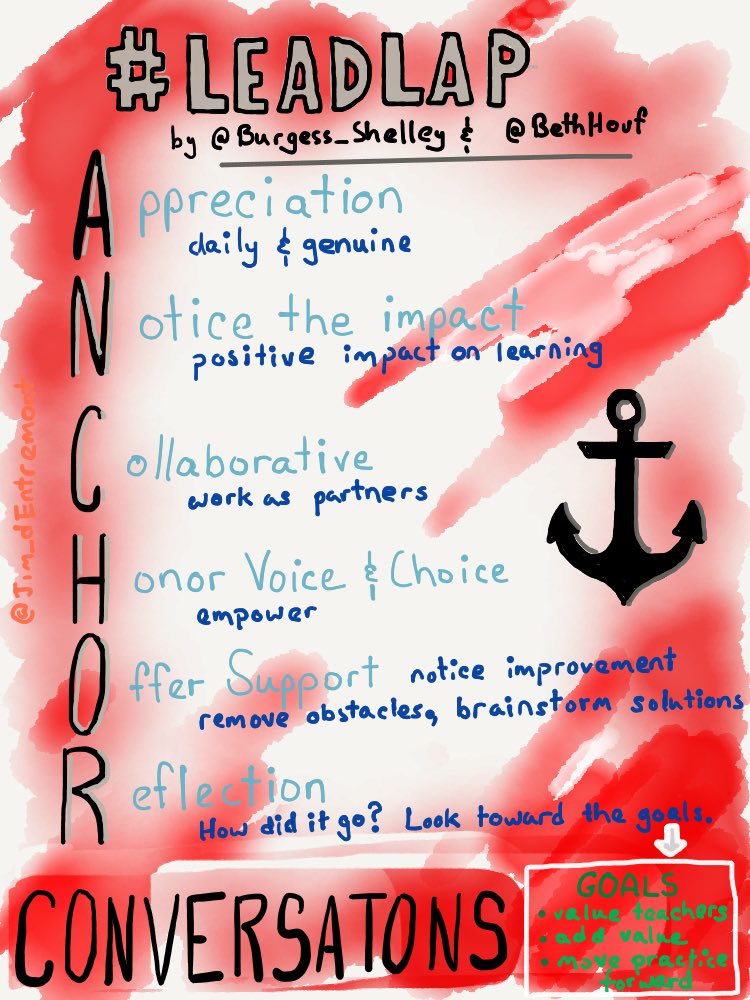
ANCHOR conversations.jpgThis could be used for either exit tickets or tickets to board. Giving immediate and ongoing feedback during class would give students the chance to act on that feedback. This should be highly effective and powerful.

ANCHOR Conversations
Lead Like a Pirate by Shelley Burgess and Beth Houf focuses on developing school culture. One thing they share is ANCHOR conversations.


Even though the ANCHOR Conversation practices are geared toward feedback between adults, I can see how students would benefit from similar guidelines. Embedded in ANCHOR conversations are developing trust, valuing the other person, remaining positive, and highlighting improvement.


I want to more routinely conference with students to provide them feedback. Using the ANCHOR Conversations guidelines will remind me how to maximize my interaction with students, making the feedback more productive.


I look forward to incorporating these three ideas so my students can receive better and more efficient feedback while developing their confidence as independent learners.


If you have had success having students use effective feedback, or if this post has generated some thoughts of your own, please share in the comments. I would appreciate hearing from you.


Sunday, July 30, 2017

Using Mystery Skype to Bring the World into Your Classroom


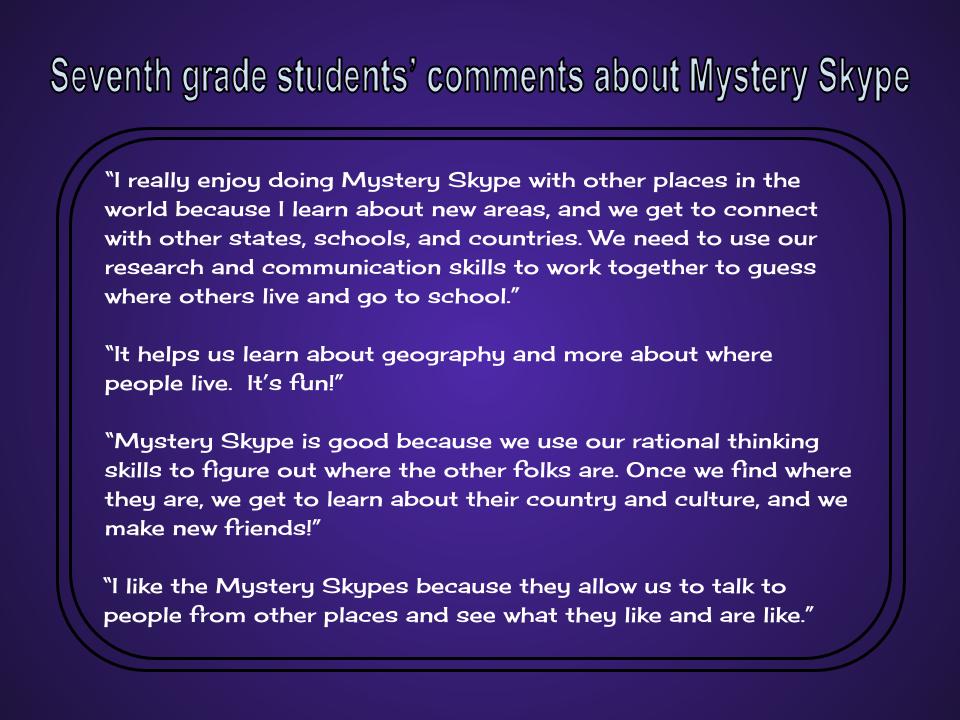
Student centered and inquiry based, Mystery Skype energizes students to learn about other places.

This tool has been useful in teaching world geography to 7th graders as it helps bring the world closer to the classroom, enlivens the content, encourages analyzing information, and develops questioning and critical thinking skills.


IMG_6374.JPG
Mystery Skype in action. The bottom shows students from Belgium on the
computer monitor while in the background (the top) my students collaborate
and view the Belgian student on the SMART Board.
A Mystery Skype is basically like 20 questions during which the two classes are trying to figure out the other’s location.  The teacher sets up the game with another teacher either through the Skype in Education website or social media such as Twitter.  Once a date and time is set - very difficult since no schools have the same schedules and class periods rotate through our school’s - you’re ready to go.

Well...almost.


Having never done one before, I was tentative to just let the students fumble their way through the challenge with me.  I looked online for help and found teachers that structured their classrooms during Mystery Skype.  Paul Solarz and Pernille Ripp gave great suggestions regarding roles and etiquette.


My colleague Sam Mandeville and I collaborated on roles our students would take on, and since we were both tentative of letting our respective students loose on the world, we set up a Mystery Skype between our classes.  Even though we were right down the hall (classes took on the role of city, country so they could actually play) and the students knew one another, it provided a terrific opportunity to put us at ease and work out kinks.  The students were also exposed to the flow of the game.


My students connected with places all over the world including Malaysia, Belgium, Canada, and Singapore.


As we gained more experience, we used less structure by having  a few students record questions and answers and all students generating and asking questions. Even a number of the quieter students stepped right up to the microphone.


The students were engaged, learned more about where they live relative to other places, were exposed to other cultures, and made connections to people otherwise impossible.


Next year, in addition to Mystery Skype, I hope to use the power of Skype to connect my classes with others around the world to collaborate on different topics or projects.  This will further enrich their lives and develop them as global citizens.


If you have had success with Mystery Skype, if you have had other positive Skype experiences in your classroom, or if this post has generated some thoughts of your own, please share in the comments. I would appreciate hearing from you.


Related Posts Plugin for WordPress, Blogger...