Showing posts with label students. Show all posts

Wednesday, September 23, 2015

Being Mindful of Hidden Curriculum


The manner in which a teacher sets up the classroom and establishes certain routines creates a hidden curriculum for students.  Within my classroom decisions are made to send and reinforce a message to the students that I feel will help them in the long run.

One thing I consistently do is to answer students’ questions with questions.  

 Does this annoy students? Yes.  

Do they get frustrated at times? Yes.  

Why do I do it?  I am trying to encourage self-reliance.  Students have or can find the answers to most of their questions. I will lead them with the questions that they should be asking themselves as reflective learners so that they may discover their own answers.  Students struggle with meta-cognition.  Helping to model that for them assists them to better embrace that approach.  As the year progresses, they become more adept at quickly answering my questions to their questions or become more self-reliant.
P1010241_picmonkeyed.jpg
Another part of the the unspoken agenda is the arrangement of the desks.  I never have the desks arranged in rows.  They are always positioned so that students can easily communicate with one another.  Desks are either arranged so that students can turn and speak with someone right next to them easily or do the same with someone right behind/in front of them. The message is that trusting, learning, and processing with their peers is a priority.  Every day, multiple times, students are encouraged to interact.  They learn best with multiple interactions and when they are processing with others.  The more opportunities they have to speak, the greater their learning. Student collaboration is essential for student growth.

  The decor of the classroom also clearly gets across priorities to the students.  

Curiosity is good.  Several artifacts around the room reinforce that students should explore.  There is an Egyptian bust, a flag flown over the U.S. capitol, Gee O. Beast, and a map with the northern and southern hemispheres reversed among other items.  Students are intrigued by these and ask questions.  Their intrinsic desire to learn is touched. 

Posters and a quote board also adorn the classroom.  These reinforce that students are powerful beings who are capable of great things.  I want students to know that, even though they may grapple with learning, with their peers or with other struggles, they can persevere and accomplished much.

The message teachers send their students through the routines and design of the classroom is just as important as content, if not more.  When a teacher is in tune with the hidden curriculum, the classroom can better meet the needs of the students and have a subtle, yet strong, influence.


If you have essential parts of your hidden curriculum or, if this post has generated some thoughts of your own, please share them in the comments. I would appreciate hearing about them.

Sunday, June 21, 2015

When Done Is Not Done

Recently, I allowed students to design their own learning around certain state/district standards. The process was a good one (described in the post: Enhance Engagement with Ownership), and both the students and I learned from it.  Although I feel it was a good experience for all of us, I would tweak it in one significant way.

Students working on a Common Craft style video.
The students, in forming their own groups, were very engaged with their partners as well as with the content.  Throughout their stage of acquiring information, I checked in with groups and individuals to make sure their understanding was on track.  I also encouraged them to share drafts of their work with me - several did through Google Docs - so I could give them more feedback.  I was satisfied that they were understanding the important ideas.

Something went amiss, however, as they put together their final products: podcasts, videos, web pages, etc.

During that creation process, they seemed to lose a sense of their understanding.  It was still there, but most could not seem to express it fully and clearly in the medium of their choice.  There were more gaps and misunderstandings that showed in the formal project than there were in my informal check-ins as they worked.

Frustrated that they could not siphon their understanding into a high-quality final product, I have decided that done is not done.

I can have students share their work with me, give them feedback, and then go back at it.  Just as they may write an essay or story and the teacher pour through it giving feedback, I can do the same for a video, web page, or podcast.

They may resist because they are comfortable with having a project be done once they turn it in.  But to encourage high quality, to show students they can improve their work as they work through it more, and to have students create work that better shows their understanding, I will give them feedback and have them revise. Done will not be done.

If you have had positive experiences with students designing their own learning or if this post has generated some thoughts of your own, please share them in the comments. I would appreciate hearing about them.

Sunday, May 17, 2015

Enhance Engagement With Ownership

The end of the school year can be hectic and exasperating.  As the warmer weather hits, students interest can wane.


To combat that this year, I have tried something different.  Instead of leading my students through geography lessons and telling them what to do, I threw it on their shoulders.  I told them what they needed to learn over the next few weeks.  I told them I wanted them to create something that demonstrated what they learned.  I then asked them what it was going to look like over the next few weeks.


I urged them to reflect on their past experiences, and they brainstormed as a class while I scribed on the board.
    • They came up with the following:
    • They would work in groups.
    • They would choose the groups.
    • They would choose a focus from my suggestions.
    • They would choose their project.
    • They wanted a process to guide them
    • They wanted to be given resources.
    • They wanted to be able to use additional resources.

I added that I wanted them to address the “Who cares?  Why should anyone outside of people there want to / need to know about it.”  I pushed it further that they include some sense of what other people could do to address any struggles or issues that people related to their topic may face.


They responded positively, some nodding silently while I described my addition as if it made perfect sense.  The projects they are choosing to create are interesting and varied.


I also presented a teacher’s dilemma:  How will the teacher know who knows what?  They all admitted being in groups when some members did nothing and they all received the same grade.  After debating options, they concluded that, although they did not want some sort of individual assessment, it would be efficient to take a quiz on their topic.

They basically designed an investigation that I pretty much could have thrown together myself.  By trusting the students and allowing them to take ownership of the learning process, I hope their learning experience will be enhanced in both understanding and quality.  I also hope that they will be more engaged over the next few weeks than they might have been.

If you have had positive experiences with allowing students to design their own learning or if this post has generated some ideas of your own, please share them in the comments. I'd love to hear about them.

Scroll over the yellow circles below to see what different groups are working on in this class.

Saturday, March 21, 2015

Drawing Parents, Students, & Teachers Together


    The situation had been a nightmare.  Ten-minute conferences, five teachers (sometimes more), one or two parents, one room.  The parents would be scheduled into a rigid time spot that could not be honored because the ten-minute slot (even with a one or two minute transition buffer) was usually never enough time.  Parents and teachers needed more time than we had, we would get backed up, and frustration would mount for teachers and parents.
  IMG_2600.JPG

        Conferences felt like a take-out window.


Student-led conferences have been the savior.  The team that I teach with has used them for a number of years now, and I never want to go back to that other kind of conference.


Students and parents come in together during a long block of time.  They can stay as long as they wish.  Students reflect on their learning, their goals, and their  habits while the parents ask questions.  Individually, the teachers check in with each family, have a conversation, and answer any questions the parents or students have.


We find that it is a much more relaxed atmosphere than the assembly line conferences we used to experience.  Parents also get more time from each of the teachers; conversations with one teacher could last more than ten minutes itself.  We have even had some parents and students stay for over an hour!


To have the student, parent, and teacher all together at one table is a boon, too.  The students give honest assessments of themselves in front of the adults, and there is no miscommunication.  In addition, the teacher (and probably the parent, too) gains a whole new perspective by seeing how the child interacts with the parent.


Prior to the conferences, students generally feel like it is going to be a miserable experience.  After all, what good could come out of my parents and teachers getting together?


Afterward, the students admit that it was nowhere near as horrific as they imagined.  They seem a bit surprised and a very pleased that the teachers have many nice things to say about them to their parents.  Many students also feel a bit empowered being put in the driver's seat.


Although the students can be nervous and a little irritated at being the cog in the conversation, the conferences evoke positive experiences (and even some smiles and laughter) between the parents, children, and teachers.  Parents - perhaps the students - walk away seeing the value of the positive interaction, and I feel student-led conferences draws the parents, students, and myself a little closer.


If you have had positive experiences with parent conferences or other positive interactions with parents or families, please share them in the comments.


Monday, February 2, 2015

Hand Students the Reins; They Will Impress You

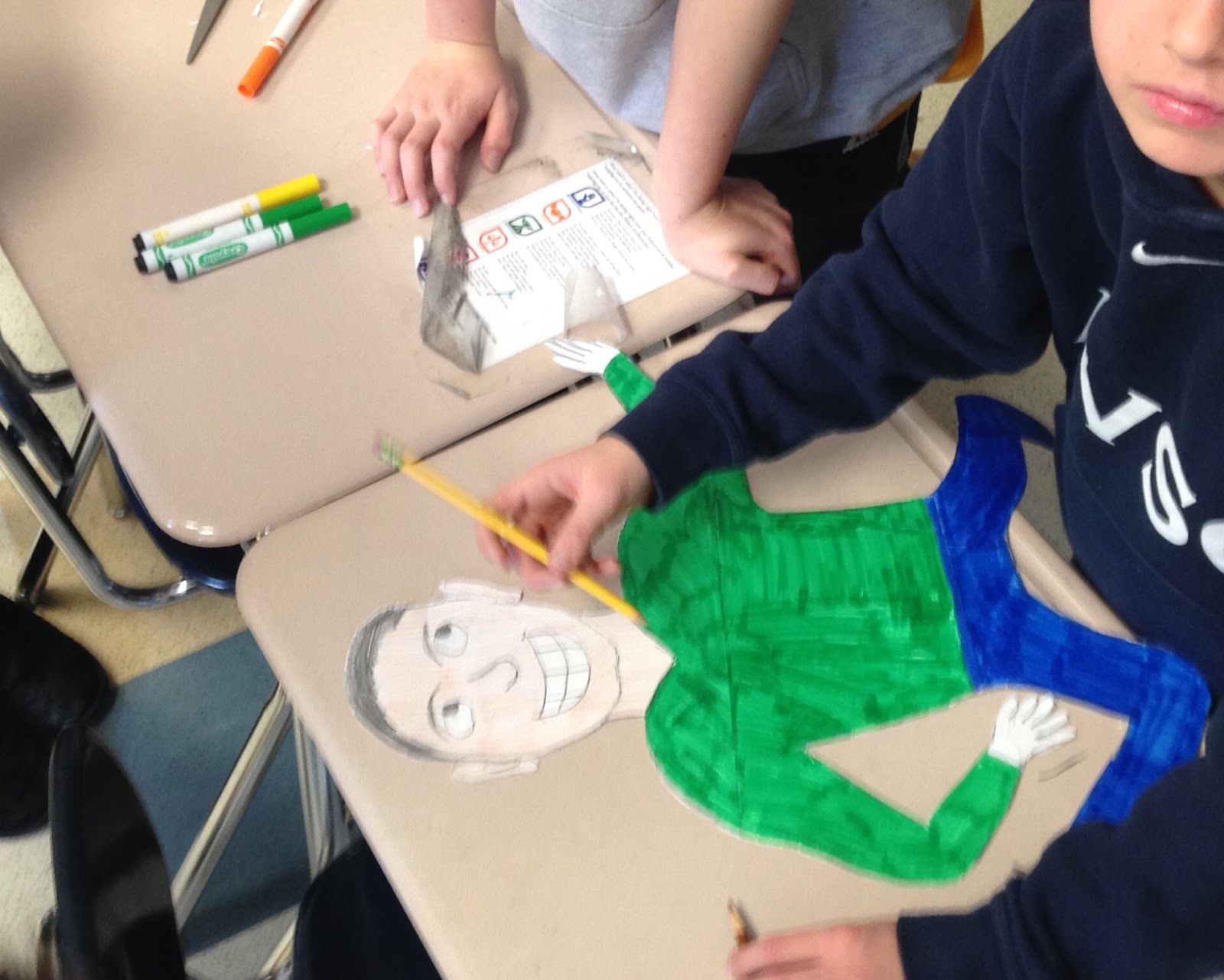
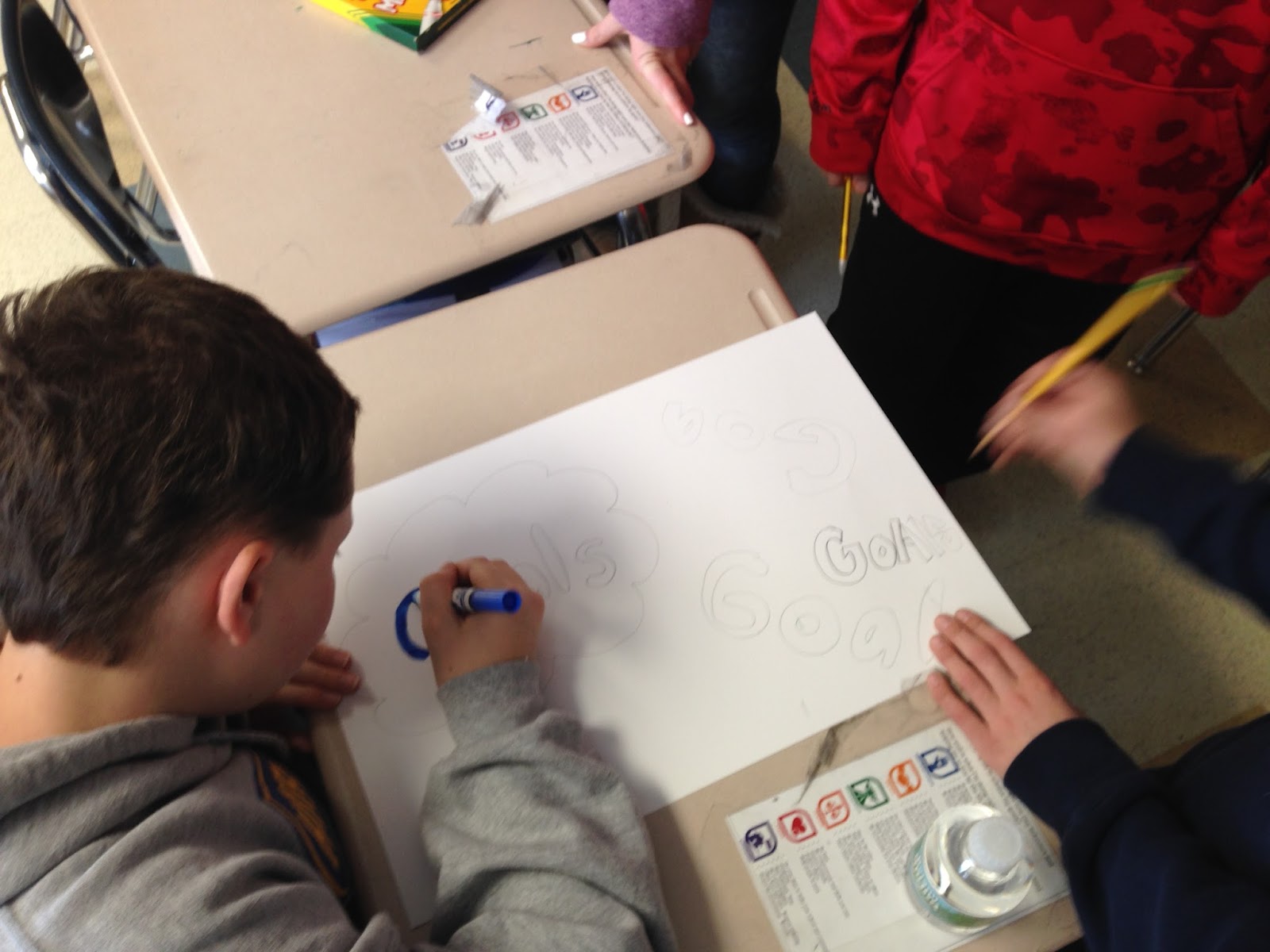
My middle school team has been having an ongoing dialogue with our students about the benefits of a growth mindset.  We have looked a little at how the brain works while learning and have explored goal setting as a tool that helps one to grow. We have been trying to encourage our students to push themselves, persevere, and be less concerned with a grade than with learning.
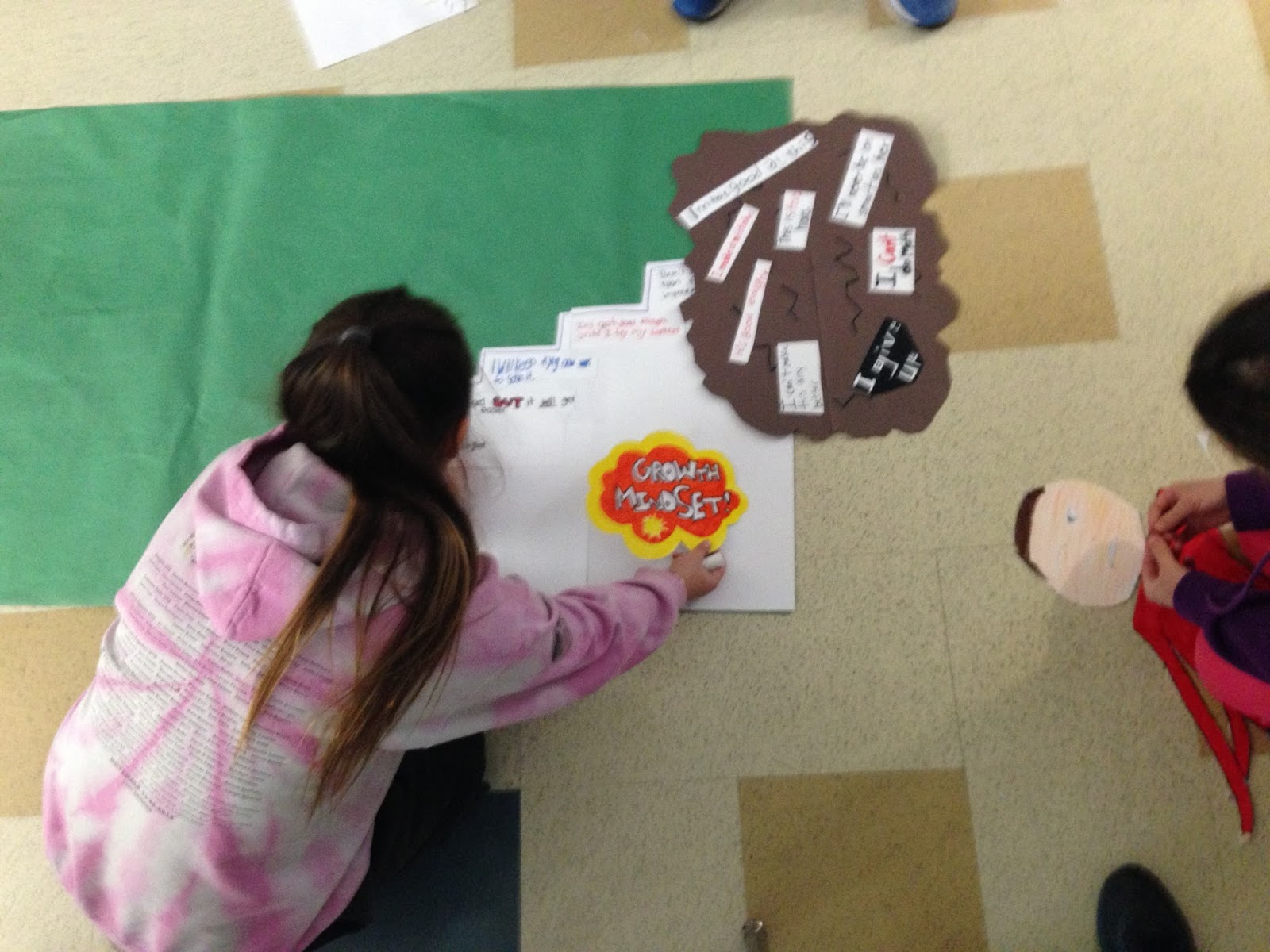
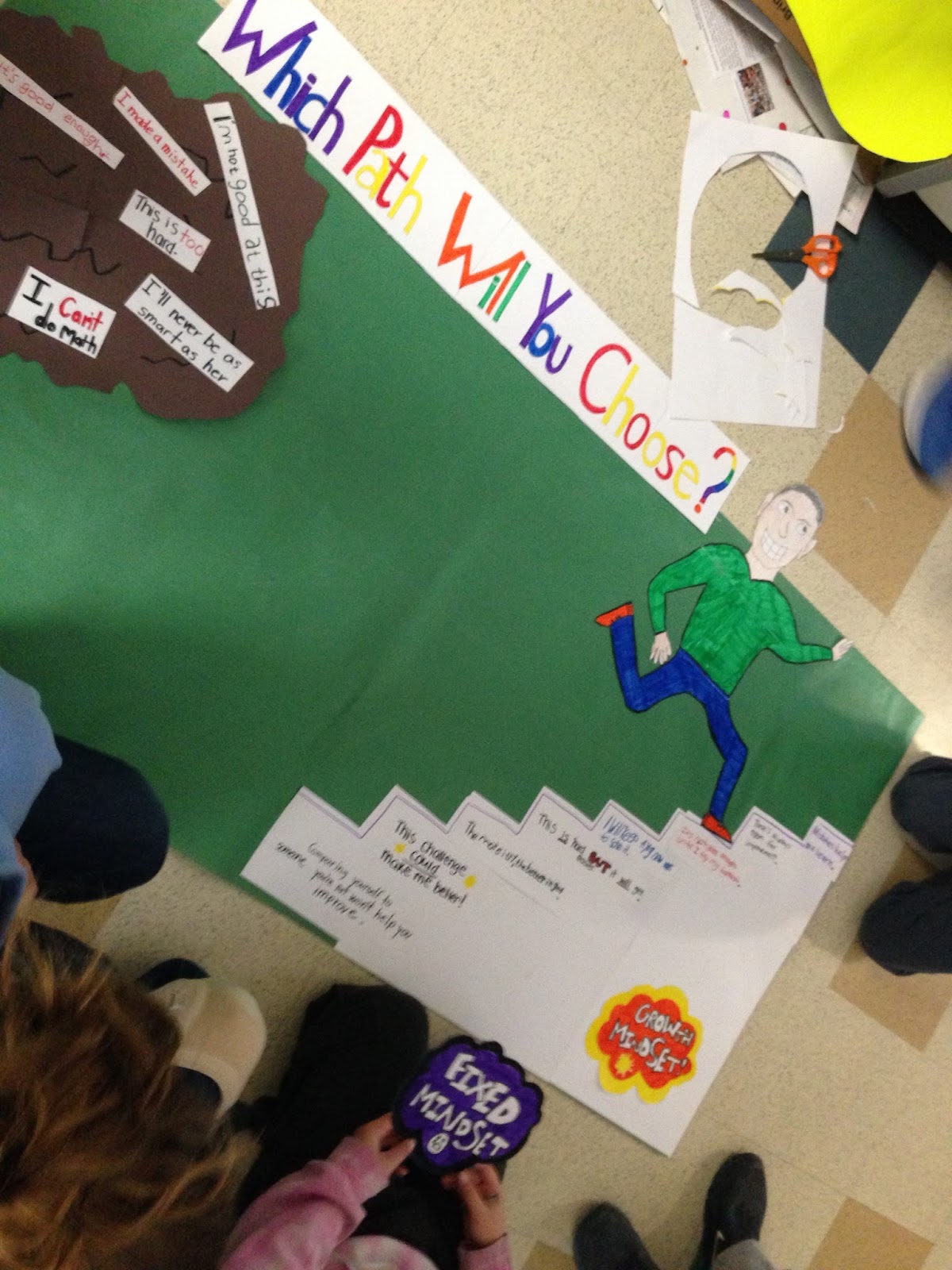
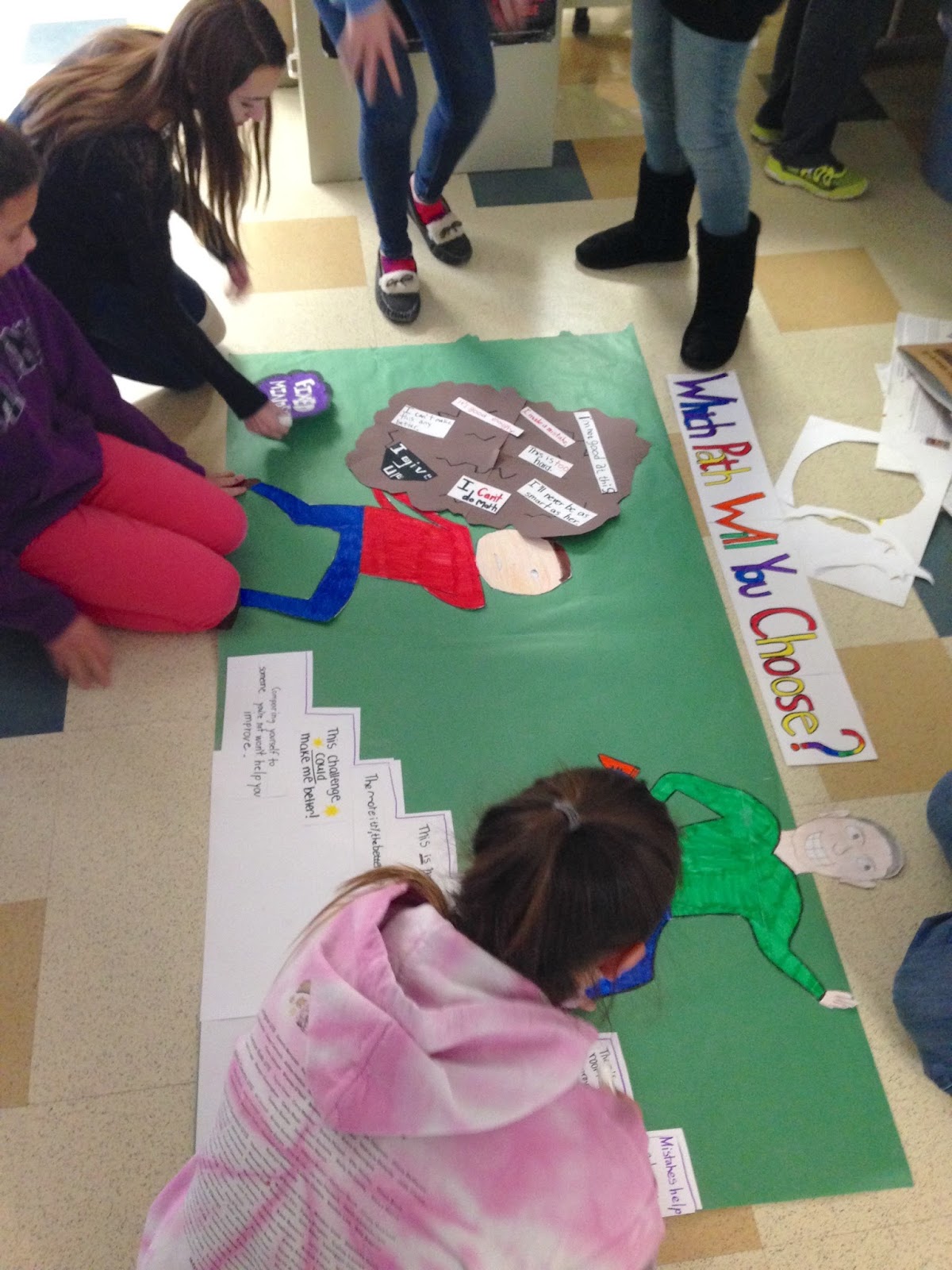
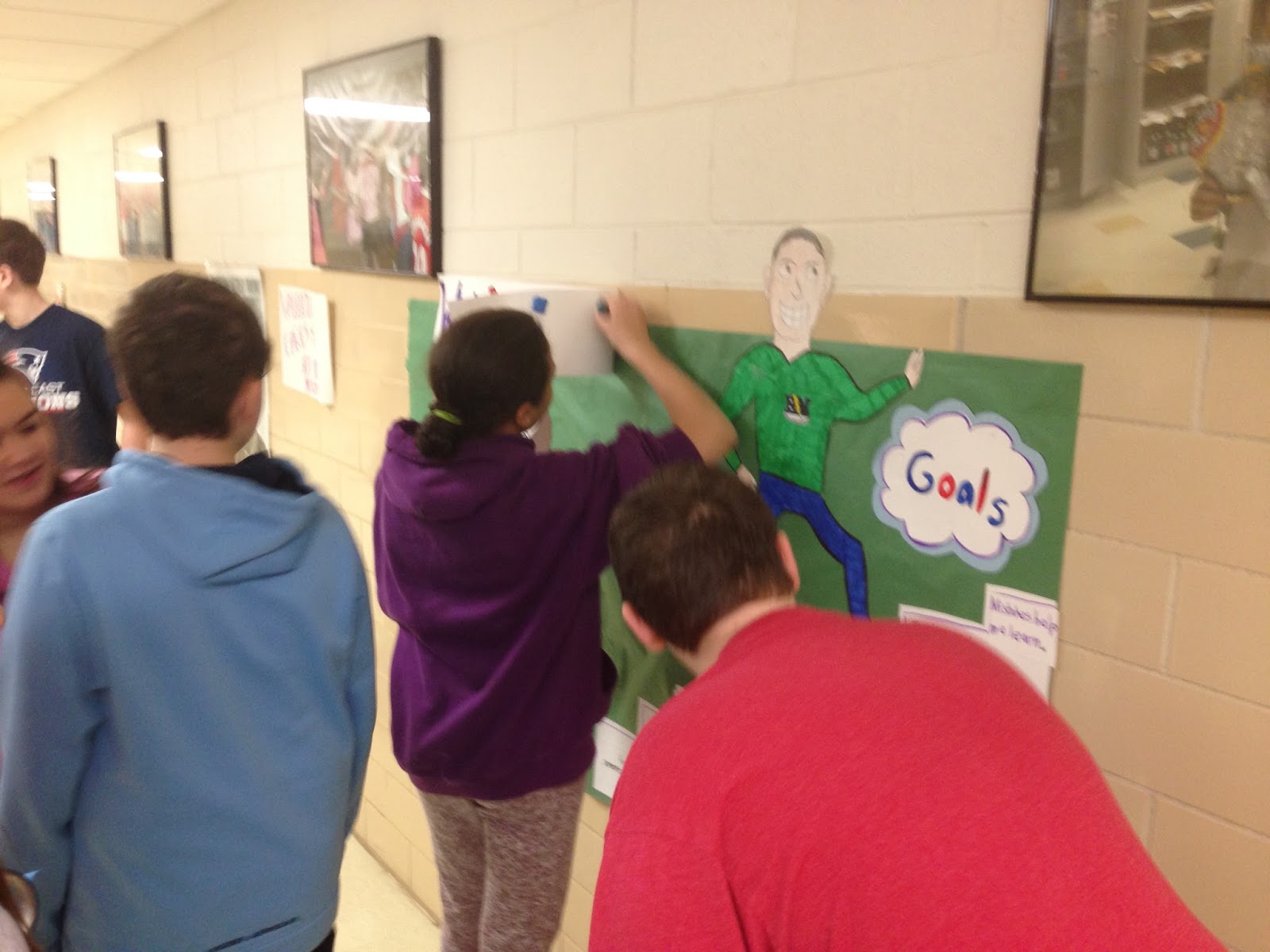
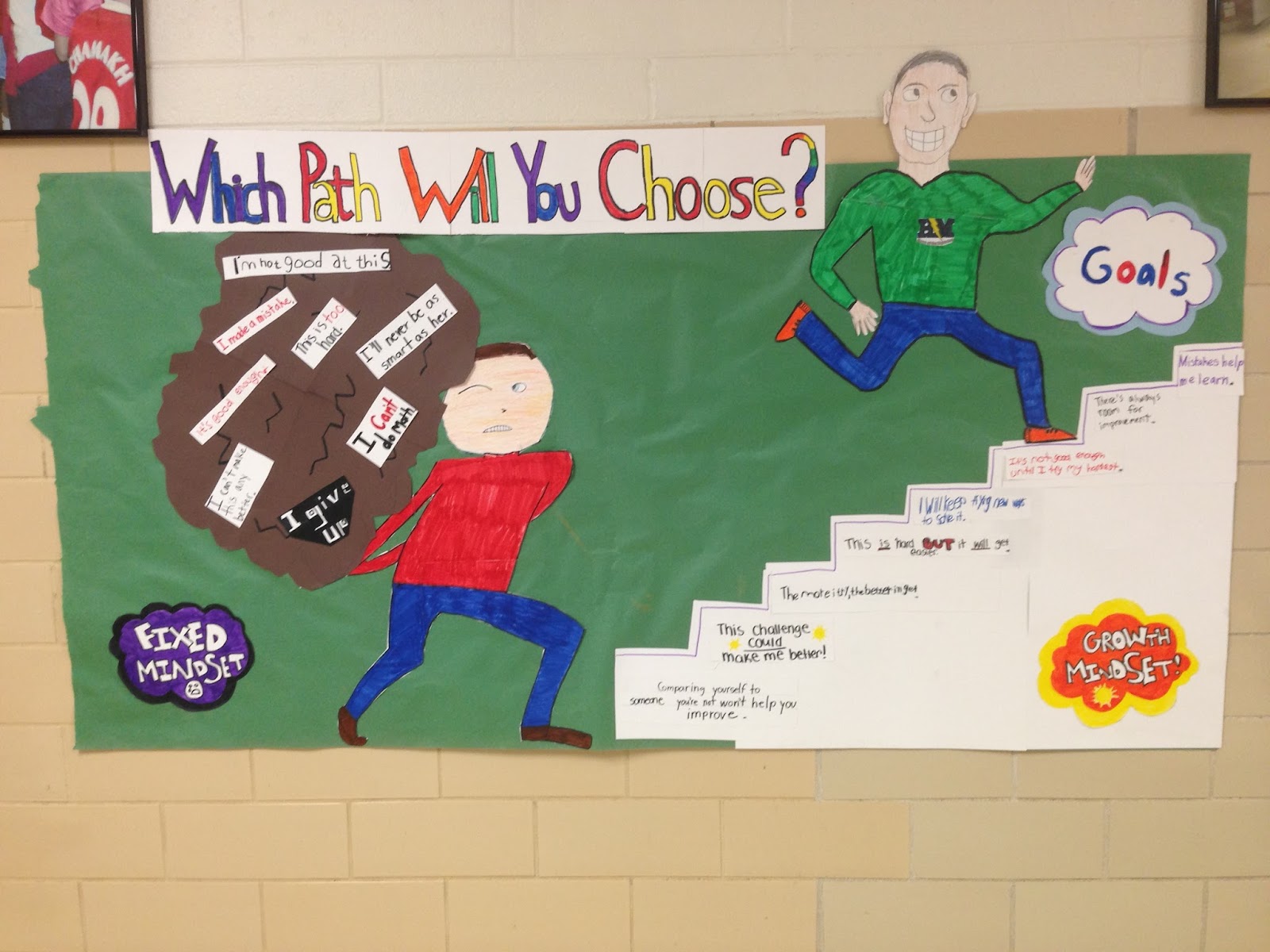
Recently we decided to have them explore growth and fixed mindsets once again.  This time we gave them a series of fixed mindset statements.  They brainstormed growth mindset statements which they could think and say to develop their growth mindset.  Ultimately, they were charged with developing a bulletin board poster that would show the value of a growth mindset.
They struggled initially, but eventually, they blew me away.  The students’ idea for the bulletin board was phenomenal and a true collective effort.  They divied the responsibilities and then went at it.  I am immensely proud of their final product and am tremendously pleased at how they pulled off the complex task.
The original goal was for the students to reinforce a growth mindset and expose the rest of the school to the ideas as well.  But what they achieved through their teamwork and efforts also reminded me that, when given responsibility and power in learning...when handed the reins, students will impress the teacher.

IMG_2780.JPG
Making the growth mindset character.

IMG_2782.JPG
Creating the title.


IMG_2786.JPG
Working on our goals.

IMG_2783.JPG
Starting to put the pieces together.

IMG_2785.JPG
Working with the puzzle they created.

IMG_2789.JPG
Nearing completion.

IMG_2830.JPG
Putting the poster up.

IMG_2831.JPG

The final product.

Tuesday, December 9, 2014

Engaging Students with Free Online Tools


With my classes, I have been able to incorporate several free apps and online tools throughout the last several years to meet learning objectives.  Using technology can motivate students and enhance student learning.  Free apps and online tools can be used with students to accomplish this.  I have grown accustomed to using different ones regularly with my students.  At the prompting of some colleagues, I offered a workshop to expose other teachers to some of the free tools that I have used with students and for myself.  The following is some of what I shared.


Tools to Access Information


URL Shorteners
URL shorteners are web applications that allow you to shorten URLs so that they are not so long and cumbersome.  They are useful for a variety of purposes:
  • Students do not need to write/type a lengthy URL
  • Looks neater when shared via email or on the web
  • Easier to share via social media
Some URL shorteners that I have used are goo.gl, tinyurl.com, and bitly.com. You simply enter in the URL and the tool will shorten it for you so you can copy it and paste it where you need it.


"Search Engines”
12373788014_771767b622_z.jpg
Flickr. Yahoo! Web. 27 Nov. 2014. <https://www.flickr.com/photos/projectdiscovery/>. CC
These search engines are a little different than what you expect from a typical search engine like Google or Bing.  I have found them valuable for my own purposes, but students see the value in using them, too.
  Instagrok presents students a visual in the form of a web to share results.  Information is sorted by key facts, websites, images, etc.  There is also a feature by which you can alter the complexity of the visual which helps different levels of students.  The best feature is that Instagrok instantly offers topics related to the topic that has been searched.  My students will conduct research by typing the same term into a search engine again and again and again…..  This provides them alternatives to combine with their topics and also gives them the sense that they need to attack research from a variety of angles.
I often have difficulty getting across to students the need to appropriately use images from the internet. They find it so very easy to copy and paste.  Creative Commons encourages the sharing of work by its creator by offering license alternatives to copyright.  These licenses (explain in the chart linked here) permit others to use and build upon the creator’s work.    Creative Commons Search assists in culling images, music, video, etc. from the web that give permissions (under a variety of restrictions) for other to use.  Teaching students to navigate Creative Commons Search has made them far more aware of copyright and the need to value other people’s work.  


Modifying Content
  Some students struggle with reading.  Summarize This shortens texts pasted into the tool.  It is no less complex but rather is truncated so that a student would be working with the same albeit a shorter amount of text.  Students who struggle to read benefit from working with a shorter piece that gets across similar main points as the longer version from which it was born.
  Rewordify works with either text pasted into the tool or with a URL pasted into the tool.  It identifies words it deems as difficult and offers replacements.  Settings can be altered so that the word is replaced while the original term appears with a mouse-over, or the original can remain with a simpler alternative appearing with the mouse-over.  It also offers pronunciation for those complex terms.


Tools for Sharing Information
Each of the following requires signing up for a free account.


  Today’s Meet allows the teacher and the students to have real-time conversations.  Although you can use it without signing up, a login gives the teacher greater controls.  Once you create a “room,” you provide the students with the URL generated from Today’s Meet, and students can leave comments.  The teacher monitors the discussion and can provide guidance for the path the conversation takes.  Teachers can use it to backchannel during a video so that students are processing information and responding to others while viewing.  The conversation during the video can enrich the viewing experience.  Today’s Meet can also be used as a warm-up at the start of class, as an exit ticket at the end of class, or for a review session either during or outside of class.
Another tool that I have used so that students can share is Padlet.  The teacher creates an area which can either be embedded on a webpage or accessed via a link.  Students can post sticky note-like responses to prompts and can include links or photos.  Padlet can be used to have the students crowd-source information, to share perspectives, as an exit ticket, etc.  In this linked example, students create sentences showing their understanding of a vocabulary term.
  The teacher or the student could use Thinglink to produce an interactive image.  The creator can put hotspots on an image which provides links or videos where information can be accessed.  A teacher could use Thinglink to present directions or procedures, as a springboard for student investigations, or simply to present information. Students could also present their own information as a project. I created a Thinglink on timezones for my students as a starting point for investigation.
  Classtools provides an array of tools for teachers to use in the classroom and does not require a login to use.  Tools can be used to engage students in demonstrating their understanding:  Twister creates fake tweets, Fakebook generates a fictional social media profile, and SMS generator creates a fake text message exchange.  There are game generators, critical thinking and writing templates, timers, a random name picker, and myriad other tools that can engage students.  Definitely a site to visit to access a wide range of tools.

  If you have any positive experiences with these free tools or others, please leave a comment. I would love to hear about them.

Tuesday, December 2, 2014

Evidence of Learning Lags

I was impressed with what my students turned out for their first blog posts.  (You can see them at the Walking With Giants blog.) They really seemed to rise to the occasion for their initial attempt publishing to the world.


At the start of the year, the students investigated digital citizenship and literacy.  Since they had the opportunity to experience an one-to-one environment in my class, I wanted them to be aware of how they should respect and use the computer as a tool.  Their blog post culminated their work, as they reflected on what they had learned.


The students had demonstrated what they had learned through other assessments, but the blog posts really allowed me to see their understanding in a different light.  Although some were still showing misunderstandings, writing for the blog gave an additional chance for students to clarify their understandings.  By incorporating the chance for feedback and revision prior to publishing, students were able to enhance both their understanding and their writing.  It was a valuable process for both students and teacher and one that I will replicate.


Somewhat disappointing, after their learning and reflection, has been the implementation of their knowledge.  Many students pointed out the need to respect copyright laws and acknowledged that have, and should not, simply copy and paste images and the such from the internet.  In practice, however, the students are still falling a bit short.  The inclination to copy and paste images from Google is hard for them to resist.  Even though they know they should take other steps, even though they are being given explicit directions so as to avoid it, they still go immediately search for an image on Google to copy and paste into their work.

Clearly students need more practice in using tools like Creative Commons to find images and other information they can use in their work for school.  They have not been instructed otherwise, until this year, and so, will need to break habits.  

Even though the evidence of their learning is lagging behind what they can state as what they have learned, I hope their practice will make perfect.
Related Posts Plugin for WordPress, Blogger...